
JULY 2, 2026
Reimagining Just Transition: Workers, Climate, and the Role of Philanthropy
By Elias Hakim, Program Officer
FORGE and Labora Fundo Brasil partnered on an event for London Climate Action Week - Reimagining Just Transition: Workers, Climate, and the Role of Philanthropy. The event was a great success, with strong turnout amongst funders and civil society who braved the historic London heatwave to attend the session.
The event drew on findings from our six month-long research project, to identify key gaps and barriers to transnational workers’ organising, and emerging strategies led by workers across six sectors: agriculture, forest and water workers, platform workers, care workers, street vendors, and waste pickers.
The panel, moderated by Maritza Silva-Farrell, Future of Workers Program Officer for Ford Foundation, brought in perspectives from a diverse set of worker’s organizations including: Kabir Arora, Secretary General of the International Alliance of Waste Pickers; Francisco Kelvim, member of the national coordination of Movement of People Affected by Dams (MAB); and Laissa Pollyana Carmo, Project Coordinator of Brazilian National Confederation of Rural Wage Earners (CONTAR, a Democracy at Work Fund partner).
The panelists shared their perspectives and experiences on how climate change is worsening labor conditions in both urban and rural work, the impacts of energy transition projects on communities and territories in the Global Majority, and the importance of worker-led solutions to address the climate crisis.
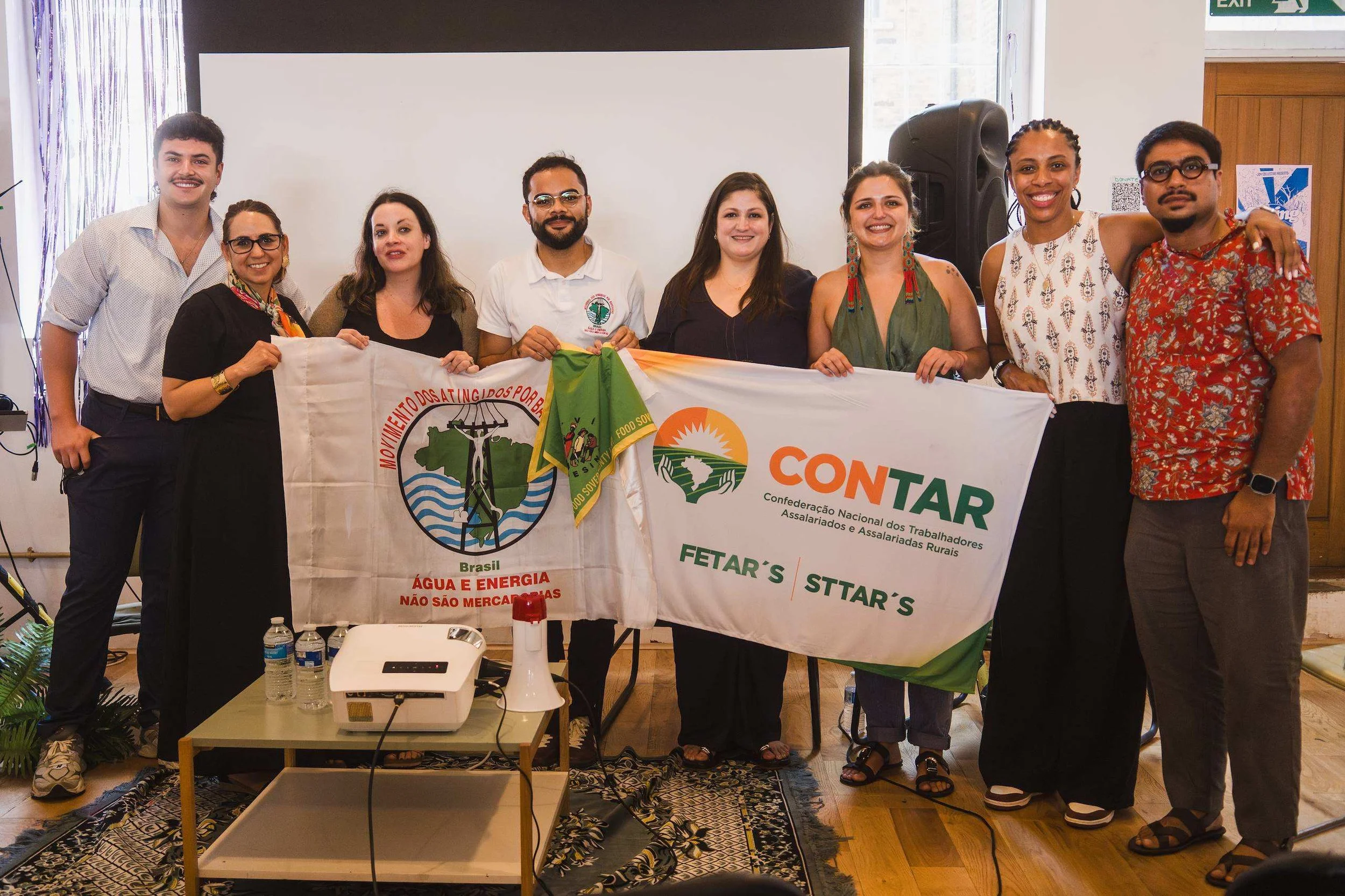
Workers are exposed to the impacts of climate change and the energy transition in different ways.
Climate impacts workers in various ways, leading to job losses and economic disruption, environmental hazards at work, disruptions to worker organizing and bargaining, and community impacts including disruption to indigenous rights. The panel shared how workers and communities in their sectors are vulnerable to climate change.
Kabir highlighted some of the specific ways that climate change impacts waste pickers. He described how waste pickers, who in many cases are already climate refugees, often live in settlements that are extremely vulnerable to climate impacts like heat and flooding. They work in dump sites that are prone to fires in summer, or in small indoor spaces with no windows or ventilation, where it is too hot to wear proper personal protective equipment (PPE) like gloves or masks.
Laissa emphasized that agricultural workers have already been exposed to toxic chemicals and pesticides before the impacts of climate change had even materialized. Now, they also face extreme temperatures of 35° - 40°C (95° - 104°F). The livestock also suffer from heat stress, which can create additional dangerous situations for the workers.
Kelvim pointed to the ways that energy transition projects themselves are harming local communities, treating them as sacrifice zones. Hydroelectric dams in Brazil continuously violate territorial rights, disrupt ecosystems, and heighten the risk for environmental disasters like the Brumadinho dam collapse in 2019 which killed 272 people. Dams are not routinely upkept and repaired, and many are constructed by international companies operating in Brazil. The dam projects are highly extractive, as the power and profits generated by dams are not benefiting the local communities which they disrupt.
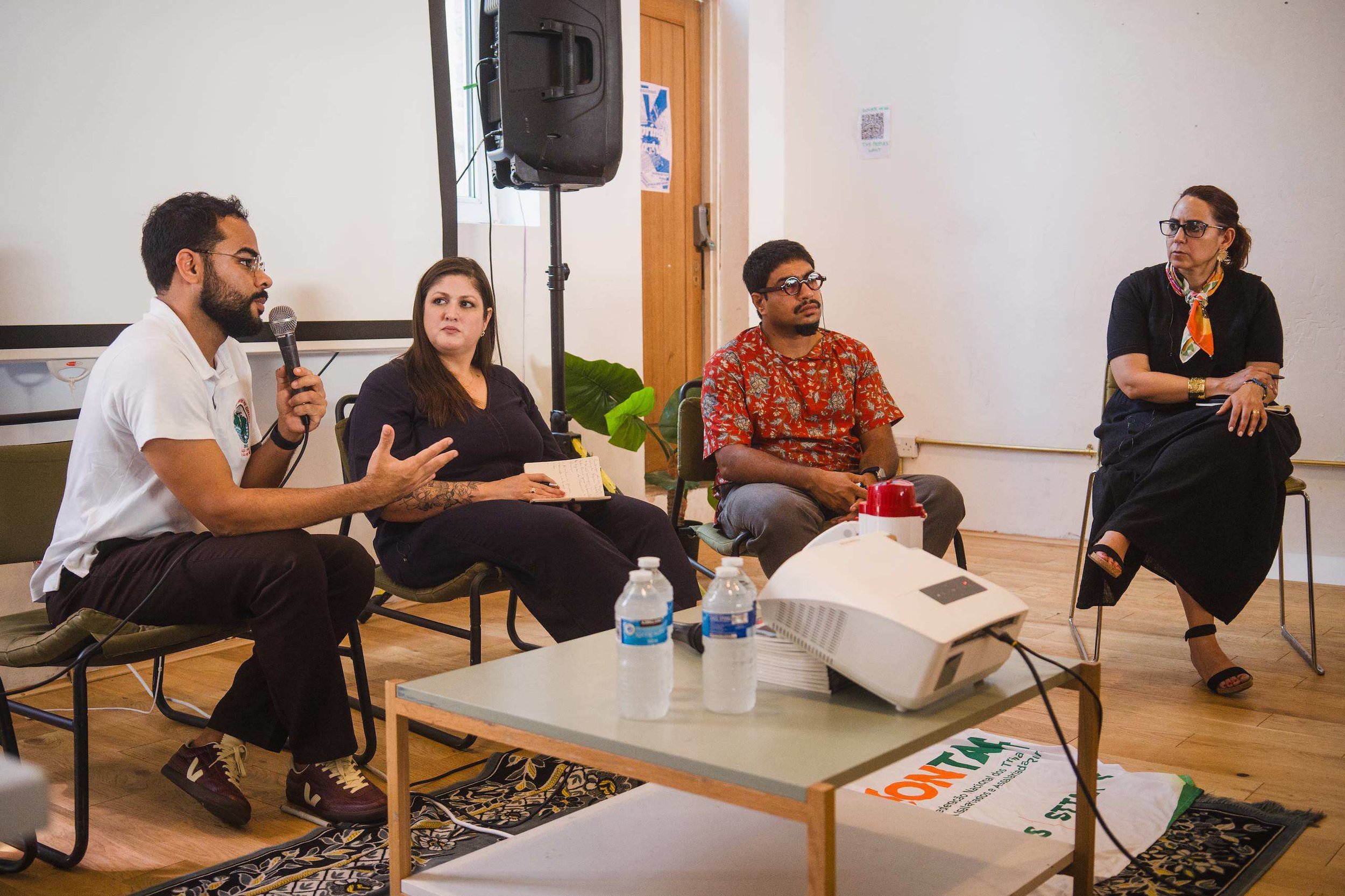
Organized workers already hold the solutions to protect people and nature.
Workers must be central to crafting policy and strategy for the energy transition - they hold the solutions to protect workers and communities, and when organized they can build the power needed to drive lasting change. Strong worker organization and representation is necessary for successful advocacy and negotiations for climate legislation, policies, and bargaining agreements. For informal workers especially, recognition as workers and organizing transnationally are critical steps to building power.
Kabir shared strategies used by waste pickers to navigate a huge power imbalance. Waste pickers tend to be disenfranchised, sitting at the margins of race, class, caste, gender, and migration status, which is what forces them into this line of work. Striking isn’t even an option on the table, so they must find other ways to engage with the state to push for a just transition, like through cooperatives. They are skilled workers - knowing which materials correspond to which value chains - which allows them to go to the government offering knowledge to improve the efficiency of waste management processes. For example, the Solid Waste Collection and Handling cooperative (SWaCH) in India consists of 3,900 self-employed members, serving more than 900,000 households with their waste management services. Organic waste management solutions utilized by waste pickers have been shown to reduce methane emissions by up to 62%. Waste pickers are ‘green jobs’ in the truest sense, cleaning our environment and reducing emissions, and they have solutions for living in a resource scarce world. Laissa shared perspectives from Brazilian rural workers, emphasizing the need for good research and collective bargaining. Employers in the agriculture sector routinely exploit nature and workers, driving deforestation, offering poor working conditions, and even engaging in slave labor. Brazilian labor regulations now require employers to provide access to cold water, sun screen, cooling and shaded areas to address heat stress, but there are enforcement issues and many employers are not complying. With support from FORGE’s Democracy at Work Fund grant, CONTAR is researching the impacts of climate change on rural workers to document the harm. This research will support efforts to negotiate for implementation of requirements along with additional protections for workers within Collective Bargaining Agreements.
Kelvim emphasized the need to reject sacrifice zones and create alternatives that center communities. Global Majority communities are critical of an energy transition that deepens privatization and territorial encroachment under the guise of decarbonization - while emissions are only going up and increasing through 2050 according to projections. The companies and extractive practices that have led to this crisis continue to be an issue in the purported solution. A just transition needs to be a popular, democratic transition - it requires decent work, territorial integrity, and free prior and informed consent. Movements need to come up with concrete, tangible proposals for alternatives, like popular energy projects that serve the people.
Workers can build power by organizing transnationally.
Transnational organizing helps workers across different geographies unify their agendas, directing energy toward a shared objective or target. When workers come together, they can learn from each other’s experiences and strategies and build political consciousness. International coordination grounds global agendas in local realities, and can also benefit progress on the local level. Secretariats and coordination bodies play an important role in providing legal, capacity, and alignment support.
Through the research, FORGE and Labora identified a few case studies that demonstrate the power of transnational organizing in the face of the climate crisis:
COP30 People’s Summit convened global people’s movements, including labor, to unify on solutions, coordinate on mobilization and advocacy goals ahead of COP30. This helped the push for Belem Action Mechanism, which has potential to be an incredible tool for coordination and knowledge sharing for Just Transition movements, including labor organizations, and gives unions a formal role in shaping just transition policies through the UNFCCC.
Movimento dos Atingidos por Barragens (MAB) -of which Kelvim is a national coordinating member - surfaced from global convening to direct international organizing efforts towards a UN Treaty on Transnational Corporations and Human Rights, coalescing power around one objective that, if passed, would create a global mechanism for corporate accountability, strengthening worker organizing and environmental efforts.
Pesticide Action Network International (PAN) works to coordinate campaigns and activities, exchange tools and knowledge within the network, and support the global movement to move away from chemical pesticides and towards agroecology, a solution that protects both the environment and workers. CONTAR is part of PAN.
International Alliance of Waste Pickers has been a key stakeholder in the International Plastic Treaty negotiations. Agreement on a mandate in 2022 was already a milestone. If implemented, will be an incredible tool for movements beyond just waste pickers
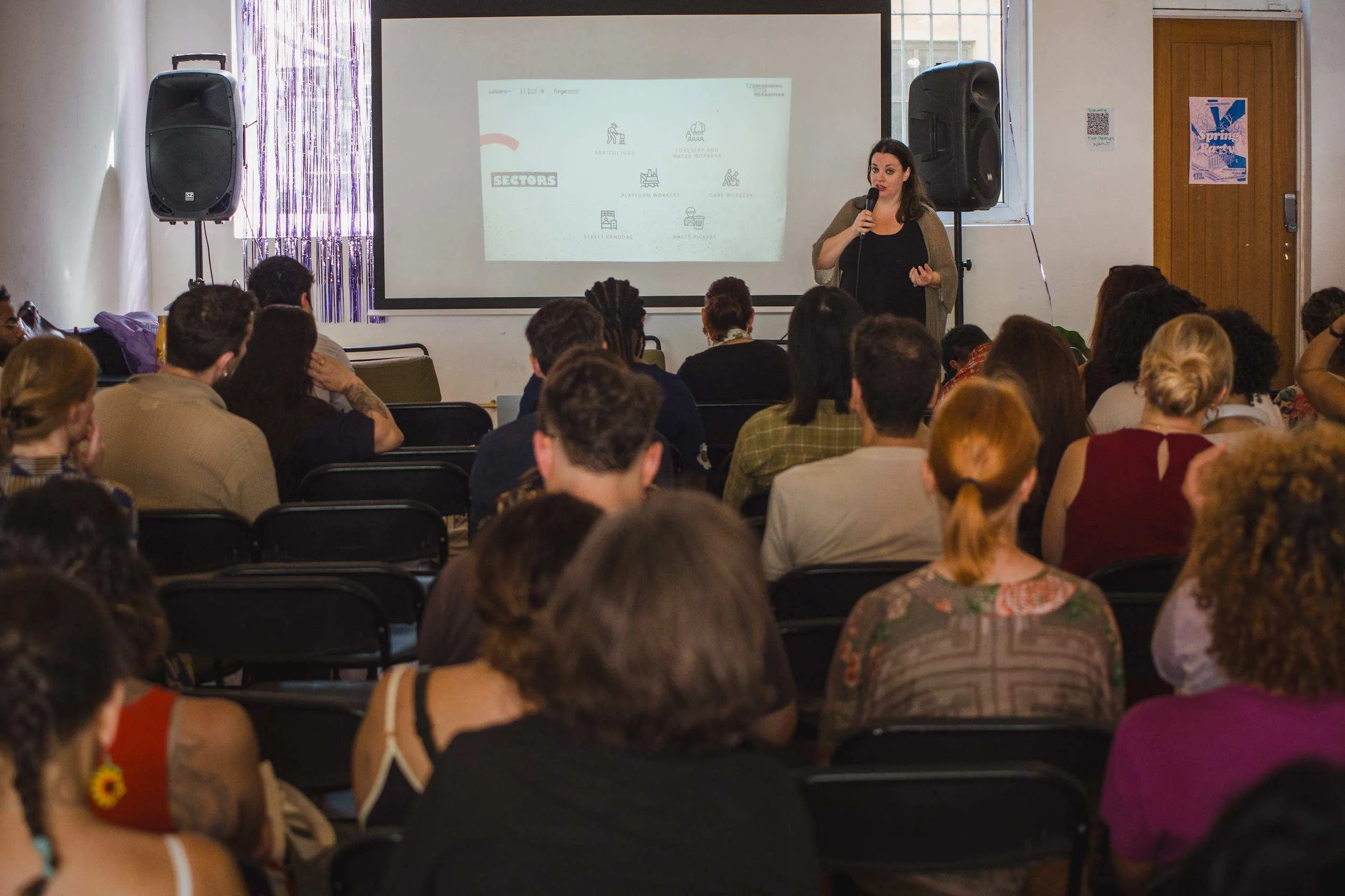
Funders have a role to play in supporting a just and democratic transition.
Democracy is critical for a just transition, but overlapping crises have created a window for the far right to gain ground globally. Movements are threatened by the closure of spaces for dialogue. Spaces like the People’s Climate Summit on the sidelines of COP (taking place this year in Antalya, Türkiye) are an example of the spaces that funders can support.
The panel recognized the need for more flexible and general operating support. Most funding their organizations receive is project based. While they work to use funds creatively - even when funds are tied to specific projects, they will incorporate political education to build their base and strengthen their organizing infrastructure however they can - more flexible funding is needed to support basic organizing.
Funders have a major role to play in supporting workers to organize transnationally. Philanthropy can support this work through funding secretariats and coordination bodies; travel and translation costs for meetings, convenings and to physically bring workers into high level policy spaces to share their perspectives; as well as data generation and research. Where possible, funders should support existing networks to strengthen the organizing infrastructure that has already been built.
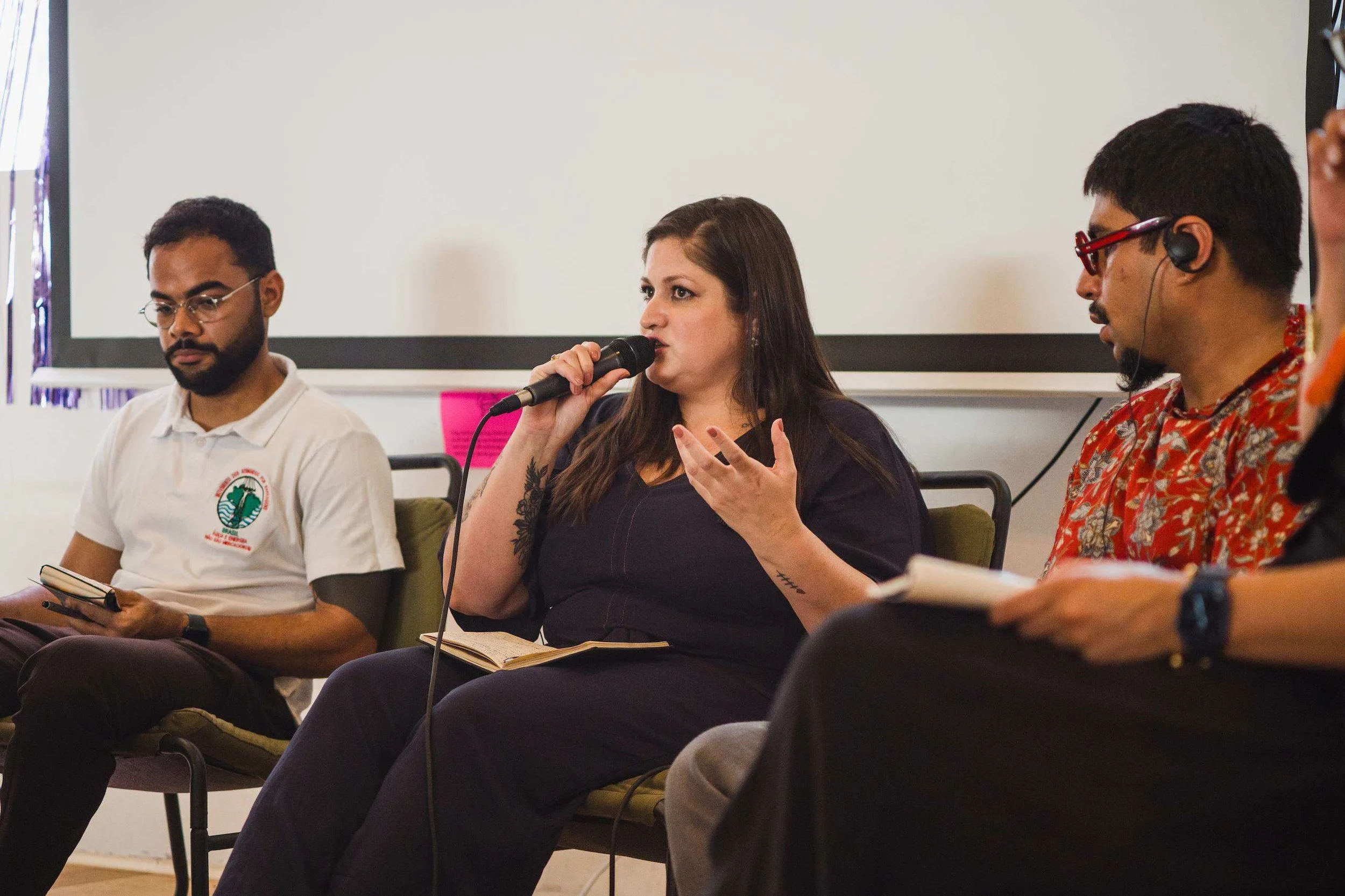
In order to be truly just, workers and communities must be central to the energy transition. The panelists demonstrated clearly that workers, especially informal workers, are amongst the most vulnerable to climate change, while also holding key solutions for adaptation and mitigation. Funders and civil society must support and center workers in all conversations on the energy transition.
FORGE offers our thanks to our partners Labora, for joining us in this learning exploration, to the incredible panelists for sharing their knowledge and insights, and all who made it out despite the heat.