June 2, 2026
FORGE visits Democracy at Work Fund partners in Kenya
By Elias Hakim, Program Officer
In May, FORGE Program Officer Elias Hakim traveled to Nairobi, Kenya, to meet with two of the projects under the 2026 round of the Democracy at Work Fund: the Amalgamated Union of Kenya Metal Workers (AUKMW) and the Association of Women Commercial Drivers of Kenya (AWCDK).
The commencement of the DAWF projects comes at a critical time for the Kenyan labor movement. The labor ecosystem is still reeling from funding cuts from governments and philanthropy. Globally, the world of work is trending towards increasing informality and gig work. Kenyans have not been spared by the unfolding energy crisis, and next year Kenya will have national elections at all levels, from municipal to presidential.
From these visits, FORGE learned about both the risks and opportunities that this moment presents for the grantee partners, and how the delivery of the DAWF grants will bolster their work and strengthen their organizations over the next 12-18 months.
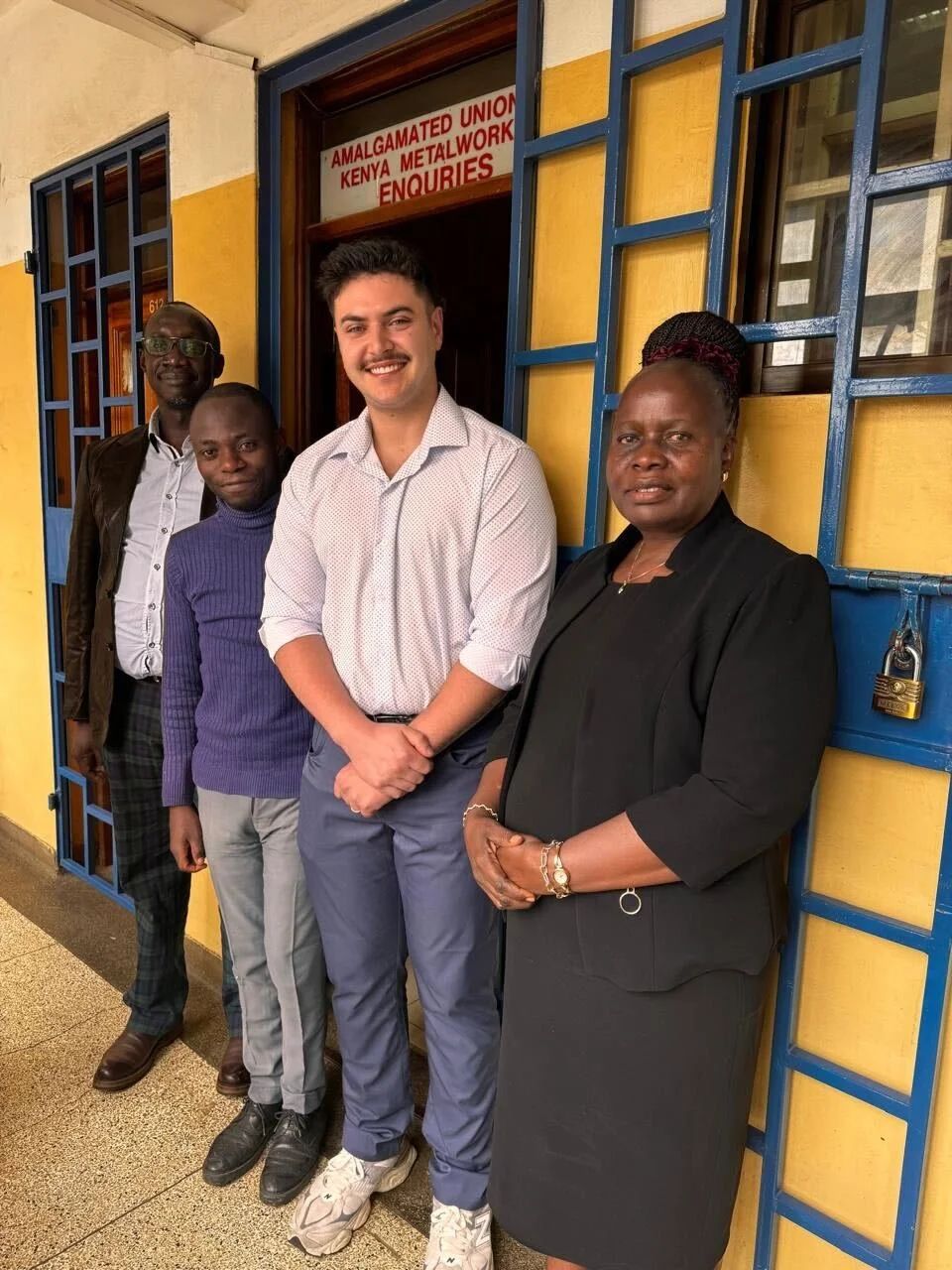
Amalgamated Union of Kenya Metal Workers (AUKMW)
In a nation where over 83% of workers are in the informal sector, the AUKMW has been a pioneer in organizing informal workers within a formal union, through the use of MOUs with informal worker associations and by allowing workers to join the union either as individuals or through workplace affiliation. Despite this, they have met many challenges, including the transient nature of informal metal workers’ work, lack of understanding of their rights, and an absence of legal protections for informal workers". Even to organize across county lines, the union must notify the municipal officials of their intent, and clarify that it is not a political meeting.
AUKMW has tried multiple digital solutions, including the creation of an app to organize informal workers and collect dues. They found some benefit, but also learned from this that many informal workers lack access to smart phones and reliable data. To address this barrier, they have now created a toll-free line for workers to file complaints and seek advice.
The AUKMW initiative under the Democracy at Work Fund aims to support informal workers with practical skills, recognition, and stronger collective power. This will result in increasing access to training and certification, improved awareness of rights, expanded union membership, advancement of gender equality, formalization, and institutional strengthening of the union.
Under their grant, they are also working to expand the pilot program to offer accreditation to informal workers, and develop women’s leadership in a male-dominated sector. Ms. Rose Omamo, the first female General Secretary of the union, has served as a role-model in this aspect - not only showing women workers what it means to own their power, but also demonstrating to male members the value of women’s leadership.
With nation-wide elections coming up in August 2027, AUKMW sees an opportunity to organize informal workers to better understand their needs and political power. Informal workers have the potential to influence the policies of municipal-level candidates if they are viewed as a potential voting bloc.
AUKMW says DAWF support is critical to their work. At a time when they have expanded to represent more informal workers, they lacked the resources they needed to support and organize them. The DAWF grant will allow them to provide training and capacity building to informal workers.
Association of Women Commercial Drivers of Kenya (AWCDK)
AWCDK is working to organize more women workers and set up more active chapters resulting in a cohesive national-level collective, leadership training and policy advocacy. Their goal is to bring greater recognition of women drivers and gender-sensitive reforms such as paid maternity leave for app workers, algorithmic bias, harassment and more.
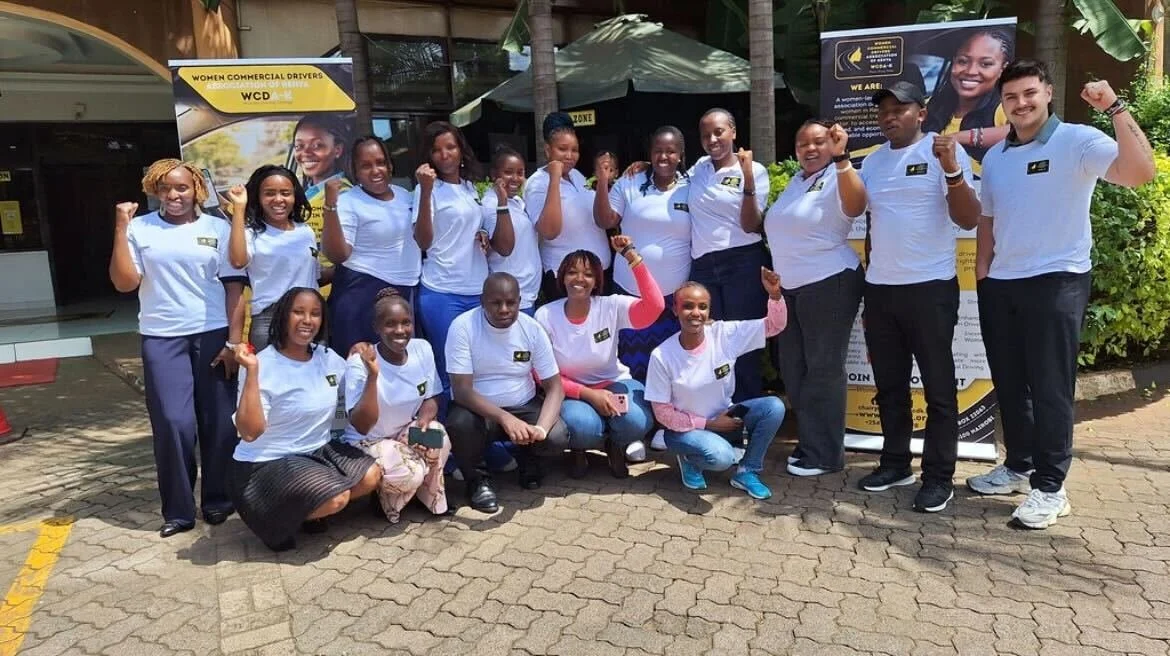
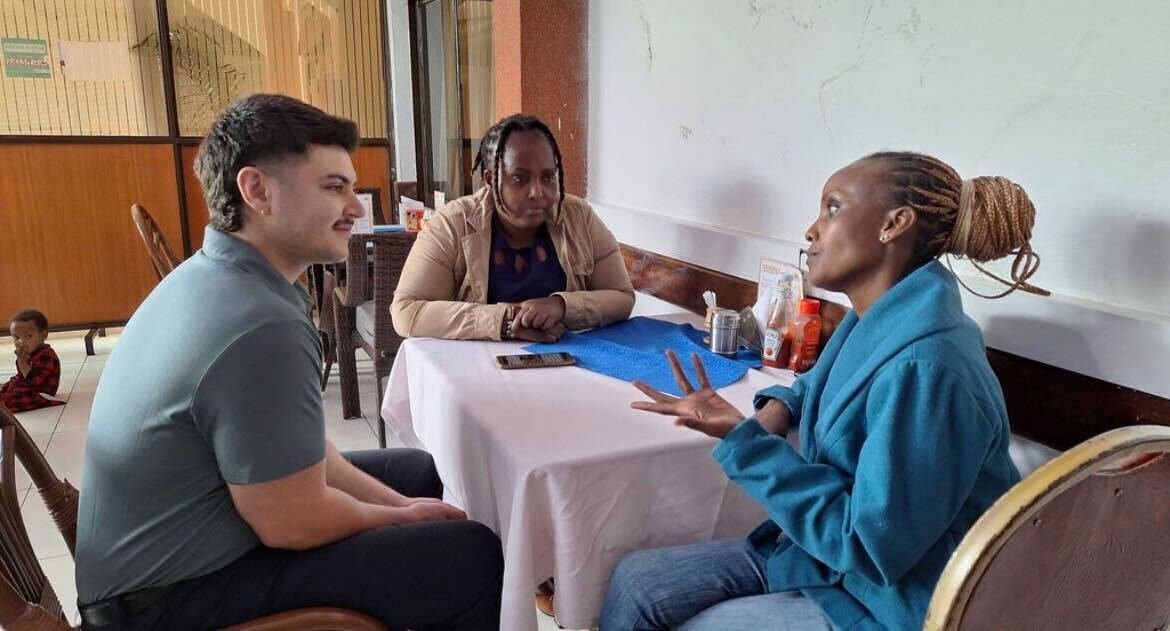
The DAWF grant was awarded at a pivotal moment for AWCDK, which has recently registered with the Kenyan government. Their membership is growing, and the energy is ecstatic. During the visit, Elias was able to attend their quarterly membership meeting, where members reported top-line takeaways including a new understanding of what constitutes gender-based violence, increased confidence in telling their stories, and learning about the power of coming together as a union.
AWCDK is making creative moves to secure financial resilience, including leasing a service station as a space for the members to repair their vehicles at a discounted rate and to generate income for the organization. They are also on the verge of leasing a space for a carwash nearby which will also serve to support the organization financially. In addition to these social enterprises, they are also introducing a paid membership model. In the context of the funding crisis, these models of securing alternative and complementary resources outside of traditional philanthropy are critical to supporting the long term sustainability of their work.
The drivers’ incomes are being hurt by the fuel price crisis, where rising costs in fuel are being absorbed by drivers, while the platforms have not adjusted with an increase in fares or driver pay. Since the site visit, this has resulted in a public transport strike and protests, which left four protestors dead and 30 injured after police clashed with protestors. AWCDK says their members remained safe and off the roads, but this moment emphasizes the importance of supporting worker organizations at the frontlines of global crises.
FORGE is proud to partner with both of these organizations in the 2026 round of the Democracy at Work Fund, and we look forward to highlighting more of their work, achievements, and lessons as their projects continue to unfold under the fund. What we have learned from these projects so far is that in the face of difficult contexts, philanthropy must invest in worker-led solutions to the biggest challenges we face.